In this article
- What Happens During Sourdough Fermentation
- The Role of Lactic Acid Bacteria
- The Role of Wild Yeast
- Time Is the Key Ingredient
- Phytic Acid Reduction and Mineral Absorption
- The Phytic Acid Problem
- How Sourdough Solves This
- What the Research Shows
- FODMAPs and Digestive Tolerance
- What Are FODMAPs?
- How Sourdough Reduces FODMAPs
- Important Caveats
- Blood Sugar Response
- The Mechanism
- What the Research Shows
- Context Matters
- Prebiotic Potential and the Gut Microbiome
- What Prebiotics Are
- How Sourdough May Act as a Prebiotic
- Where the Evidence Stands
- The Gluten Question
- What Sourdough Fermentation Does to Gluten
- What This Does NOT Mean
- Who Might Benefit
- Real Sourdough vs. Commercial "Sourdough"
- The Problem with Store-Bought "Sourdough"
- How to Identify Real Sourdough
- Practical Takeaways for Home Bakers
- Fermentation Length Matters Most
- Whole Grain Amplifies the Benefits
- Use a Mature, Active Starter
- Do Not Add Commercial Yeast
- Frequently Asked Questions
Sourdough and Gut Health: The Facts
Review what science says about sourdough, digestion, blood sugar, nutrients, real fermentation, and common health claims.

Sourdough bread has been baked for thousands of years. Long before anyone understood microbiology, bakers knew that a naturally fermented dough produced bread that tasted better, lasted longer, and seemed easier on the stomach than quick-risen alternatives. Today, modern research is catching up with that intuition — and the findings are genuinely interesting.
But this is also a topic where enthusiasm can outrun evidence. Sourdough is not a miracle food. It will not cure diseases, and it is not safe for everyone. What the science does show is that the long fermentation process creates measurable changes in the bread — changes that affect how your body digests it, absorbs its nutrients, and responds to its sugars.
This article walks through what we actually know, what the research suggests but has not fully confirmed, and where the common claims go too far. If you bake your own sourdough or are considering starting, understanding the real science will help you make informed choices — and appreciate what is genuinely remarkable about this ancient process.
What Happens During Sourdough Fermentation
To understand why sourdough might be different from commercial bread, you first need to understand what is happening inside that dough during its long rise.
A sourdough starter is a living ecosystem containing two main groups of microorganisms: lactic acid bacteria (LAB) and wild yeast. In a mature starter, lactic acid bacteria typically outnumber yeast by a ratio of about 100:1. Both groups are essential, but they do different things.
The Role of Lactic Acid Bacteria
Lactic acid bacteria are the workhorses of sourdough fermentation. They consume sugars from the flour and produce lactic acid and acetic acid — the organic acids that give sourdough its characteristic tang. But acid production is only part of their contribution.
During a long fermentation (typically 12 to 24 hours for a true sourdough process), LAB also:
- Produce enzymes that break down proteins, starches, and other complex molecules in the flour
- Generate exopolysaccharides — complex sugars that contribute to dough texture and may have prebiotic properties
- Create antimicrobial compounds that inhibit mold and pathogenic bacteria, which is why sourdough bread stays fresh longer than commercial bread
- Lower the pH of the dough, which activates the flour's own enzymes (particularly phytase, which we will discuss shortly)
The Role of Wild Yeast
The wild yeast in sourdough (primarily species like Kazachstania humilis and Saccharomyces cerevisiae) produces the carbon dioxide that makes the bread rise. But unlike commercial baker's yeast, which works fast and is added in large quantities, wild sourdough yeast works slowly alongside the bacteria. This extended timeline is what allows all the enzymatic and biochemical changes to occur.
Time Is the Key Ingredient
A standard commercial loaf might go from mixing to baking in 2 to 4 hours. A true sourdough typically ferments for 12 to 24 hours or more (including bulk fermentation and cold retard). This extended time is not just about flavor. It is the reason sourdough has a different nutritional profile than conventionally leavened bread. Every benefit discussed below depends on this long fermentation.
Phytic Acid Reduction and Mineral Absorption
This is one of the most well-supported health benefits of sourdough fermentation, and it deserves a detailed explanation.
The Phytic Acid Problem
Whole grains contain phytic acid (also called phytate), a compound that binds to minerals like iron, zinc, magnesium, and calcium. When phytic acid binds these minerals, your body cannot absorb them — they pass through your digestive system unused. Phytic acid is sometimes called an "anti-nutrient" for this reason.
This matters because whole grain bread is often recommended for its mineral content. But if a significant portion of those minerals is locked up by phytate, you are not getting the full nutritional benefit you expect.
How Sourdough Solves This
Flour naturally contains an enzyme called phytase that breaks down phytic acid. The problem is that phytase works best in acidic conditions (pH 4.5 to 5.5) — and a standard dough made with commercial yeast stays at a relatively neutral pH throughout its short rise.
Sourdough fermentation creates exactly the acidic environment phytase needs. As lactic acid bacteria produce organic acids and lower the dough's pH, phytase activates and begins breaking down phytic acid. The longer the fermentation, the more phytate gets degraded.
What the Research Shows
Studies have consistently demonstrated this effect:
- Research published in the Journal of Agricultural and Food Chemistry found that sourdough fermentation can reduce phytic acid content by 50 to 80%, depending on fermentation time and flour type
- Whole grain sourdough breads show significantly higher bioavailable iron, zinc, and magnesium compared to the same flour made with commercial yeast
- Rye sourdough is particularly effective at phytate reduction because rye flour has high natural phytase activity
This is not a marginal effect. A 2003 study by Lopez et al. showed that mineral bioavailability from sourdough bread was comparable to white bread — meaning the sourdough process effectively unlocked the minerals that whole grain flour contains but normally keeps inaccessible.
The practical takeaway: If you eat whole grain bread for its nutritional value, sourdough fermentation meaningfully increases the amount of minerals your body can actually use.
FODMAPs and Digestive Tolerance
Many people report that they can eat sourdough bread without the bloating or discomfort they experience with regular bread. For years, this was dismissed as anecdotal. Research now suggests there is a real mechanism behind it.
What Are FODMAPs?
FODMAPs (Fermentable Oligosaccharides, Disaccharides, Monosaccharides, and Polyols) are short-chain carbohydrates that some people have difficulty digesting. When FODMAPs reach the large intestine undigested, gut bacteria ferment them rapidly, producing gas that causes bloating, cramping, and discomfort. People with irritable bowel syndrome (IBS) are particularly sensitive.
Wheat flour contains significant amounts of fructans — a type of FODMAP. Fructans are the primary reason wheat-based bread causes digestive distress in FODMAP-sensitive individuals.
How Sourdough Reduces FODMAPs
During long fermentation, the microorganisms in sourdough consume fructans as a food source. The longer the dough ferments, the more fructans get broken down.
A landmark 2016 study by Monash University (the institution that developed the low-FODMAP diet) tested breads made with different processes:
- White bread with commercial yeast (2 hours): High fructan content
- Whole wheat with commercial yeast (2 hours): High fructan content
- Sourdough white bread (long fermentation): Significantly reduced fructan content
- Whole wheat sourdough (long fermentation): Reduced fructan content, though higher than white sourdough
The researchers found that sourdough fermentation of at least 12 hours reduced fructan content to levels that many IBS patients could tolerate.
Important Caveats
This does not mean everyone with IBS can eat sourdough without problems. Individual tolerance varies widely. And the degree of FODMAP reduction depends on:
- Fermentation length: Short fermentation (4 to 6 hours) produces much less reduction than long fermentation (12+ hours)
- Flour type: White flour sourdough tends to be lower in residual FODMAPs than whole grain
- The specific starter culture: Different microbial communities have different capacities for fructan degradation
If you have IBS and want to try sourdough, start with a small portion of long-fermented white sourdough and observe your response. This is not medical advice — work with your healthcare provider.
Blood Sugar Response
The effect of sourdough on blood glucose is one of the more consistently studied aspects of sourdough nutrition, and the results are noteworthy.
The Mechanism
When you eat bread, your body breaks down the starches into glucose, which enters your bloodstream. How quickly this happens is measured by the glycemic index (GI) — a scale from 0 to 100 where higher numbers mean faster blood sugar rise.
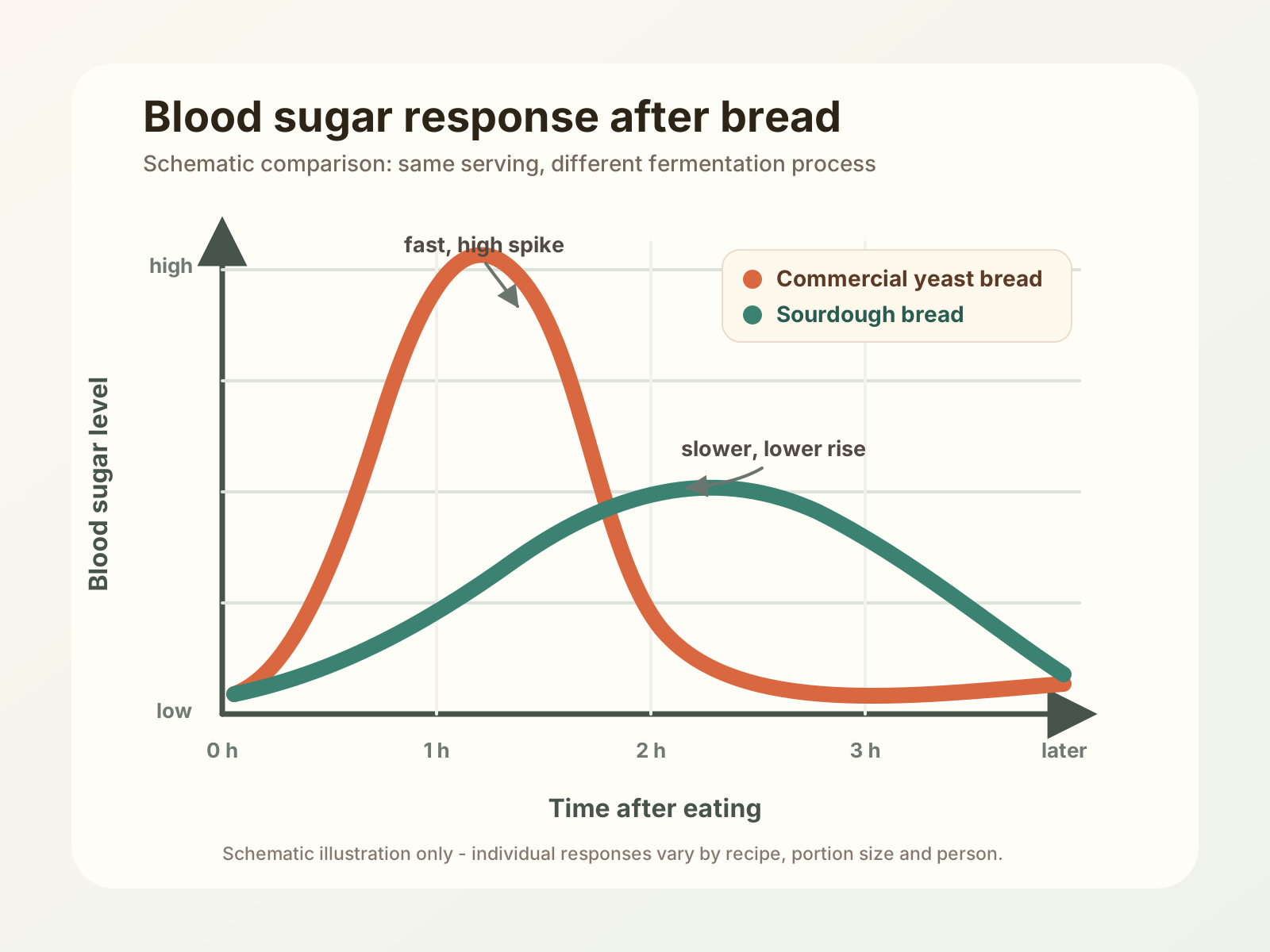
Sourdough bread typically has a lower glycemic index than equivalent bread made with commercial yeast. Two mechanisms explain this:
-
Organic acids slow gastric emptying. The lactic acid and acetic acid in sourdough slow the rate at which food leaves your stomach and enters your small intestine. This spreads glucose absorption over a longer period, reducing the blood sugar spike.
-
Starch modification during fermentation. Long fermentation partially changes the starch structure, increasing the proportion of resistant starch — starch that resists digestion in the small intestine and behaves more like fiber.
What the Research Shows
Multiple studies have measured this effect:
- A 2008 study in the British Journal of Nutrition found that sourdough bread produced a 25 to 30% lower glucose response compared to bread made from the same flour with commercial yeast
- A study by Liljeberg et al. found that the effect was specifically linked to the organic acid content — the more acid (particularly lactic acid), the lower the glycemic response
- The effect has been confirmed in studies using both white flour and whole grain flour sourdough
Context Matters
A few important points to keep in mind:
- Sourdough bread still raises blood sugar. It is bread, made from flour. The effect is a reduction in the spike, not an elimination of it.
- The benefit depends on the specific bread. A white sourdough baguette with a short fermentation will have a higher GI than a whole grain sourdough with a 24-hour ferment. Process matters as much as the label "sourdough."
- Individual variation is real. Glycemic response varies significantly between people due to differences in gut microbiome, insulin sensitivity, and other factors.
The practical takeaway: Real sourdough bread, made with long fermentation, tends to produce a more moderate blood sugar response than equivalent commercial bread. This is relevant for anyone managing blood sugar, but it does not make sourdough a "low glycemic" food in absolute terms.
Prebiotic Potential and the Gut Microbiome
This is an area where the science is genuinely promising but still early. It is worth understanding what we know and what remains speculative.
What Prebiotics Are
Prebiotics are compounds (usually fibers or complex carbohydrates) that feed beneficial bacteria in your gut. They are different from probiotics (which are the bacteria themselves). A diet rich in prebiotics supports a diverse, healthy gut microbiome.
How Sourdough May Act as a Prebiotic
During fermentation, lactic acid bacteria produce exopolysaccharides (EPS) — complex sugar molecules that are not digested in the small intestine. When these compounds reach the large intestine, they may serve as food for beneficial gut bacteria, particularly Bifidobacteria and Lactobacillus species.
Additionally, the resistant starch created during long fermentation also has prebiotic properties. When resistant starch reaches the colon, gut bacteria ferment it and produce short-chain fatty acids (SCFAs) — particularly butyrate, which is an important energy source for colon cells and has been linked to reduced inflammation.
Where the Evidence Stands
- Studies have confirmed that sourdough fermentation increases resistant starch content and that resistant starch has prebiotic effects. This chain of evidence is solid.
- The specific prebiotic effects of sourdough exopolysaccharides are supported by in vitro (lab) studies but have limited human trial data so far.
- No large-scale clinical trial has yet demonstrated that regularly eating sourdough bread meaningfully changes gut microbiome composition in humans.
Research in this area is active and growing. The mechanisms are plausible and supported by preliminary evidence, but it would be premature to claim that sourdough is a proven prebiotic food.
The Gluten Question
This is the area where misinformation is most common and where clarity matters most. Please read this section carefully.
What Sourdough Fermentation Does to Gluten
Long sourdough fermentation does partially break down gluten proteins. The acidic environment and the proteolytic enzymes produced by lactic acid bacteria degrade some of the gluten network during fermentation. Studies have measured reductions in certain gluten peptides, particularly the ones associated with immune responses.
What This Does NOT Mean
Sourdough bread is NOT safe for people with celiac disease.
This cannot be stated strongly enough. While sourdough fermentation reduces some gluten peptides, it does not eliminate them. The residual gluten content in sourdough bread made from wheat, rye, spelt, or any gluten-containing grain far exceeds the threshold considered safe for celiac disease (20 parts per million).
Some experimental studies have used extremely long fermentations (48 to 72 hours) with specially selected bacterial strains to reduce gluten below the celiac safety threshold. These are laboratory conditions, not home baking. A normal sourdough process does not achieve this level of gluten degradation.
Who Might Benefit
People with non-celiac gluten sensitivity (NCGS) — a condition where gluten-containing foods cause symptoms but without the autoimmune response of celiac disease — sometimes report better tolerance of sourdough bread. This may be due to:
- The partial gluten degradation reducing the overall gluten load
- The FODMAP reduction (since some people diagnosed with NCGS may actually be reacting to fructans, not gluten itself)
- Changes in other wheat proteins during fermentation
However, individual responses vary enormously. If you have any form of gluten sensitivity, consult your healthcare provider before experimenting with sourdough.
The bottom line: Sourdough fermentation modifies gluten, but it does not remove it. Sourdough bread made from wheat flour contains gluten. Period.
Real Sourdough vs. Commercial "Sourdough"
Understanding these health mechanisms leads to an important practical question: does the bread you are eating actually deliver these benefits?
The Problem with Store-Bought "Sourdough"
Many commercially sold breads labeled "sourdough" are not made through genuine long fermentation. Instead, they are made with:
- Commercial yeast as the primary leavening agent, with sourdough flavoring or a small amount of inactive starter added for taste
- Short fermentation times (2 to 4 hours) that do not allow the biochemical changes described above
- Added acids (citric acid, acetic acid) to mimic sourdough flavor without actual fermentation
- Dough conditioners and preservatives that a real sourdough does not need
A bread made this way may taste somewhat sour, but it has not undergone the long microbial fermentation that produces the nutritional changes. It is, nutritionally, closer to regular commercial bread.
How to Identify Real Sourdough
Ingredients list: Real sourdough needs only flour, water, salt, and a sourdough culture (starter). If the ingredients list includes commercial yeast, added acids, or a long list of additives, it is not a traditionally fermented sourdough.
Fermentation time: Ask your baker. A genuine sourdough process involves a bulk fermentation of at least 4 to 6 hours at room temperature, and ideally much longer (12 to 24 hours including cold retard). Many artisan bakeries are happy to explain their process.
Bake your own: The most reliable way to get real sourdough with maximum health benefits is to bake it yourself. You control the ingredients, the fermentation time, and the process. A long, slow ferment — the kind you do when you mix dough in the evening and bake the next morning — is exactly the process that produces the biochemical changes the research describes.
Practical Takeaways for Home Bakers
If you want to maximize the potential health benefits of your sourdough bread, here are evidence-based guidelines:
Fermentation Length Matters Most
The single most important factor is time. Longer fermentation means more phytate degradation, more FODMAP reduction, more starch modification, and more organic acid production. Aim for:
- Bulk fermentation: 4 to 8 hours at room temperature (20 to 24 degrees Celsius), or
- Cold retard: 12 to 24 hours in the refrigerator after initial bulk fermentation
- Total fermentation time: 12 to 24+ hours from mixing to baking
A dough that ferments overnight in the fridge is not just developing better flavor. It is undergoing the biochemical changes that research links to improved nutrient absorption and digestive tolerance.
Whole Grain Amplifies the Benefits
Whole grain flours contain more minerals, more fiber, and more phytic acid than white flour. Since sourdough fermentation is particularly effective at reducing phytic acid, the nutritional advantage of sourdough over commercial yeast is greatest with whole grain flour.
Consider using 20 to 30% whole grain flour in your sourdough recipes. You get the mineral content of whole grains with the improved bioavailability that fermentation provides.
Use a Mature, Active Starter
A well-maintained starter with a diverse microbial community will produce a more thorough fermentation. Feed your starter regularly, and make sure it is at peak activity when you use it to build your dough.
Do Not Add Commercial Yeast
Adding commercial yeast to sourdough dough speeds up the rise but short-circuits the fermentation. The wild yeast and bacteria in your starter need time to do their work. If you are in a hurry, plan your baking schedule differently rather than adding commercial yeast.
Use recipe management directly in the proofit app — baking made simple.
See the sourdough app →Frequently Asked Questions
Is sourdough bread healthier than regular bread? Research suggests that genuinely long-fermented sourdough bread has measurable advantages over commercial yeast bread: better mineral bioavailability, reduced FODMAPs, and a lower glycemic response. Whether these differences are significant enough to affect your health depends on your overall diet, your individual physiology, and whether the bread is truly long-fermented. Sourdough is not a superfood, but the fermentation process does create real, documented changes.
Can people with celiac disease eat sourdough bread? No. Sourdough bread made from wheat, rye, spelt, or any gluten-containing grain is NOT safe for people with celiac disease. While fermentation reduces some gluten peptides, the residual gluten content remains far above the safety threshold. People with celiac disease must avoid sourdough bread made from gluten-containing grains.
Does sourdough bread help with IBS? Some people with IBS report better tolerance of long-fermented sourdough compared to commercial bread. Research from Monash University suggests this is linked to reduced fructan (FODMAP) content after extended fermentation. However, individual tolerance varies significantly. If you have IBS, start with a small portion, choose white sourdough with a long fermentation, and consult your healthcare provider.
Why does sourdough have a lower glycemic index? The organic acids produced during sourdough fermentation (lactic acid and acetic acid) slow gastric emptying — the rate at which food moves from your stomach to your small intestine. This spreads glucose absorption over a longer period. Additionally, long fermentation increases resistant starch, which is not digested in the small intestine and does not contribute to blood sugar rise.
Does sourdough bread contain probiotics? No. The baking process kills the live bacteria and yeast in the dough. Sourdough bread does not contain live microorganisms when you eat it. The health benefits come from what the microorganisms did to the bread during fermentation — the biochemical changes they produced — not from consuming live bacteria.
How long does sourdough need to ferment for health benefits? Research suggests that significant phytate reduction and FODMAP degradation require at least 12 hours of total fermentation time. A typical process of 4 to 6 hours bulk fermentation followed by 12 to 18 hours of cold retard achieves this comfortably. Shorter fermentation times (under 6 hours total) produce much less of these changes.
Is store-bought sourdough as healthy as homemade? It depends entirely on how it was made. Many commercial "sourdough" breads use commercial yeast with sourdough flavoring and short fermentation times. These breads do not deliver the benefits of true long fermentation. Check the ingredients: real sourdough needs only flour, water, salt, and starter. If it contains commercial yeast, added acids, or preservatives, it was not made through genuine sourdough fermentation.
Does sourdough fermentation destroy nutrients? No. Fermentation transforms nutrients rather than destroying them. It breaks down phytic acid (improving mineral absorption), partially degrades complex proteins (improving digestibility), and modifies starches (creating resistant starch with prebiotic properties). The overall effect is that the nutrients in sourdough bread are more accessible to your body, not less.
Can sourdough help with weight loss? There is no strong evidence that sourdough bread specifically promotes weight loss. The lower glycemic response may help with satiety (feeling full longer), and some research suggests that meals producing lower blood sugar spikes are associated with reduced subsequent hunger. But bread is bread — it contains calories from carbohydrates, and eating sourdough will not cause weight loss on its own.
Is sourdough bread anti-inflammatory? Some preliminary research suggests that the fermentation byproducts in sourdough, particularly the increased resistant starch and its conversion to short-chain fatty acids in the gut, may have anti-inflammatory properties. However, this research is early-stage and mostly based on in vitro or animal studies. It would be premature to claim sourdough bread as an anti-inflammatory food based on current evidence.