In this article
- What You Need
- Ingredients
- Equipment
- Why rye flour to start?
- Why a kitchen scale — not measuring cups?
- The 7-Day Schedule
- Day 1: Mix
- Day 2: First Check
- Day 3: Early Signs
- Day 4: Switch Flour, Feed Twice
- Day 5: Things Start Moving
- Day 6: Track the Peak
- Day 7: The Final Test
- How to Know When Your Starter Is Truly Ready
- The Four Reliable Indicators
- The Float Test — Skip It
- Troubleshooting Common Problems
- Storing Your Starter Long-Term
- The Fridge Method (recommended for most home bakers)
- The Counter Method (for frequent bakers)
- Your Next Step
- Frequently Asked Questions
How to Make a Sourdough Starter in 7 Days
Create a sourdough starter in 7 days with feeding ratios, flour choices, temperature tips, and readiness signs for your first bake.
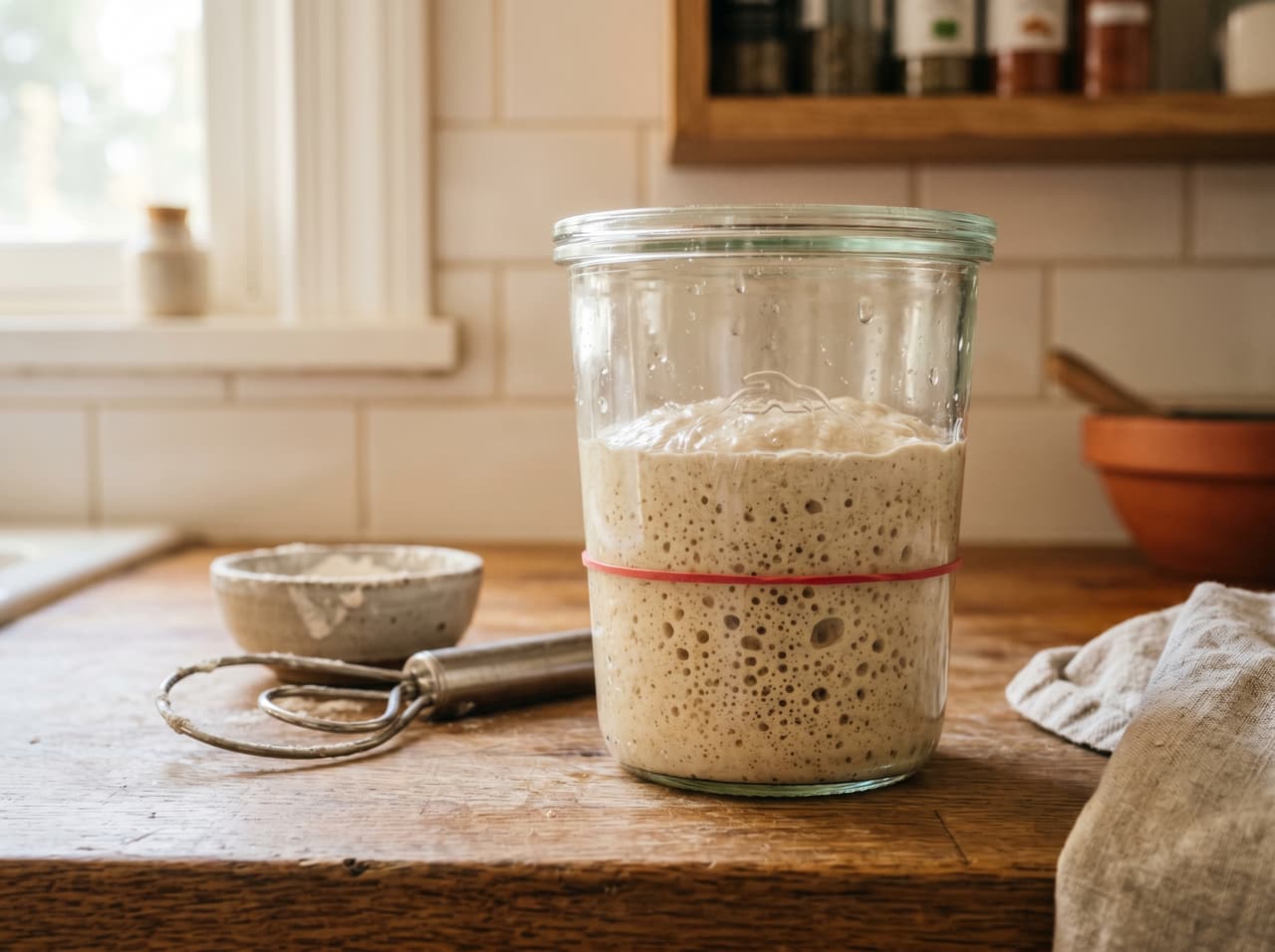
A sourdough starter is a living culture of wild yeast and lactic acid bacteria that leavens your bread, develops complex flavor, and improves digestibility — all without a single packet of commercial yeast. Making one from scratch takes about 7 days and requires only two ingredients: flour and water.
The process is part science experiment, part daily ritual. You're cultivating a specific community of microorganisms that already live on your flour and in your kitchen. Temperature, flour type, and feeding ratios all influence how quickly things develop — but patience and consistency matter most.
This guide walks you through every day in detail: what to do, what you'll see and smell, and how to know — definitively — when your starter is ready to bake with.
What You Need
Ingredients
- Whole rye flour (for days 1–3, and optionally beyond)
- All-purpose or bread flour (for days 4–7 and long-term feeding)
- Unchlorinated water — filtered tap water or tap water left uncovered for an hour works fine
Equipment
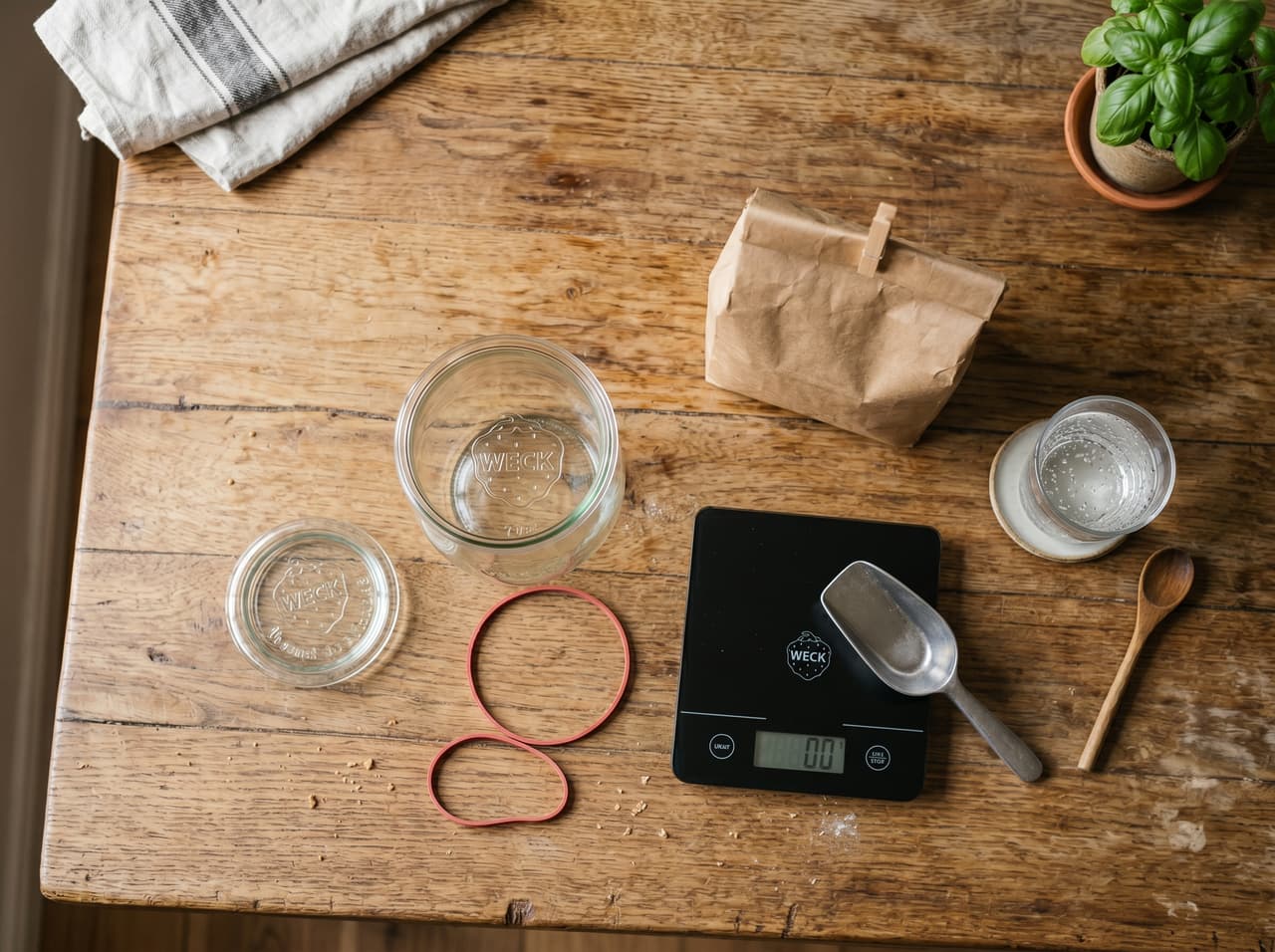
- A tall glass jar (at least 500ml capacity — you need room to watch it rise)
- A kitchen scale
- A rubber band or piece of tape (to mark the starter level after each feeding)
- A thermometer (optional, but helpful — especially in your first week)
Why rye flour to start?
Whole rye flour contains significantly more wild yeast and native bacteria than refined white flours. The bran and germ are still present, making it a much richer environment for fermentation to ignite. Starting with rye gets things moving faster — often by a day or two — compared to white flour alone. Once your culture is established, you can transition to the flour you prefer for baking.
Why a kitchen scale — not measuring cups?
Sourdough is a ratio game. A cup of flour can weigh anywhere from 120g to 160g depending on how you scoop it — a 33% difference that will completely destabilize your starter. Weighing in grams takes the guesswork out of every feeding. If you don't already own a kitchen scale, it's the single most important tool investment you'll make as a bread baker.
The 7-Day Schedule
Feed your starter once a day for the first three days, then twice a day from day 4 onward. The specific timing doesn't matter — morning and evening is a natural rhythm. Try to be consistent: your culture will start to anticipate feedings.
Day 1: Mix
Combine 50g whole rye flour and 50g lukewarm water (around 24–26°C / 75–79°F) in a clean glass jar. Stir vigorously until no dry flour remains. The consistency should be like thick pancake batter.
Cover loosely — a lid slightly ajar, a cloth secured with a rubber band, or a piece of plastic wrap with a few holes all work. The starter needs air flow, but you don't want it to dry out.
Mark the level with your rubber band. Set it somewhere warm — a kitchen counter away from drafts is fine. Ideal temperature is 24–27°C (75–80°F).
What to expect: Nothing visible yet. Wild yeast populations are very low at this point. The fermentation process has started, but you won't see evidence of it today.
Day 2: First Check
Check your jar. You may see a few small bubbles forming, or nothing at all — both are normal.
Discard half of your starter (down to roughly 50g), then add:
- 25g whole rye flour
- 25g lukewarm water
Stir well, mark the new level, and cover loosely.
Why discard? This might feel wasteful, but it's essential. Keeping all the starter and adding more flour creates an ever-growing mass that becomes difficult to manage and dilutes the acid balance. Discarding regularly keeps the environment fresh, the ratios correct, and the microorganism population healthy and competitive. The "discard" is actually usable — save it in a second jar in the fridge and use it in pancakes, crackers, or flatbreads.
What to expect: Maybe a few more bubbles than yesterday. Possibly nothing visible. Don't worry — activity often disappears after the first feeding as the culture adjusts.
Day 3: Early Signs
Repeat the same feeding as day 2: discard down to 50g, add 25g rye + 25g water.
What to expect: By day 3, most starters begin showing real signs of life — small bubbles throughout the mixture, a slight rise, or a sour or tangy smell developing. Some starters, especially in cooler kitchens (below 20°C), stay quiet until day 4 or 5. This is normal.
If you see a dramatic rise — the starter doubling in size — this is likely an early burst of less desirable bacteria (leuconostoc) that creates a lot of CO₂ before the acid environment establishes itself. It will settle down over the next day or two. Don't be discouraged.
Day 4: Switch Flour, Feed Twice
From today, switch to your regular bread flour (or all-purpose flour if that's what you have). You'll also start feeding twice a day, roughly 10–12 hours apart.
Each feeding: discard down to 50g, then add 25g bread flour + 25g water.
What to expect: A more consistent rise and fall pattern should be emerging. You might notice the starter rises after feeding, then flattens back out — this is the peak-and-fall cycle you'll use to time your feedings. The smell may become more yeasty or tangy.
Day 5: Things Start Moving
Continue twice-daily feedings (discard to 50g, add 25g flour + 25g water, twice a day).
What to expect: By day 5, most starters are showing reliable activity — visible bubbles throughout, rising noticeably within a few hours of feeding, and a pleasant sour or fruity aroma. The texture starts to look like a loose, bubbly mousse.
Start paying attention to when your starter peaks after feeding — this is the most important piece of information for baking day.
Day 6: Track the Peak
Continue twice-daily feedings.
After your morning feeding, mark the level and check every hour. Note when it reaches its highest point — this is the "peak." Healthy starters typically peak in 4–8 hours at room temperature. A starter peaking consistently within this window is almost ready.
What to expect: The starter should be doubling (or nearly doubling) after each feeding. The surface will dome slightly and then start to recede when it's past peak. The smell is tangy and yeasty — pleasant, like yogurt or a mild beer.
Day 7: The Final Test
Before your morning feeding, look for the telltale signs of a mature, ready starter:
- It reliably doubles (or more) within 4–8 hours of feeding
- The texture looks like a bubbly mousse — airy throughout, not just on the surface
- The aroma is tangy, yeasty, or faintly fruity — not unpleasantly sharp or like nail polish remover
- This pattern has been consistent for at least 2 feedings in a row
If your starter checks all four boxes: it's ready. Time to bake.
If you're not sure, give it another 1–2 days of twice-daily feedings. There's no harm in a few extra days of cultivation — it only builds a more resilient culture.
How to Know When Your Starter Is Truly Ready
The most common beginner mistake is using a starter that looks active but isn't yet reliable enough to leaven a loaf. Here's how to assess readiness accurately:
The Four Reliable Indicators
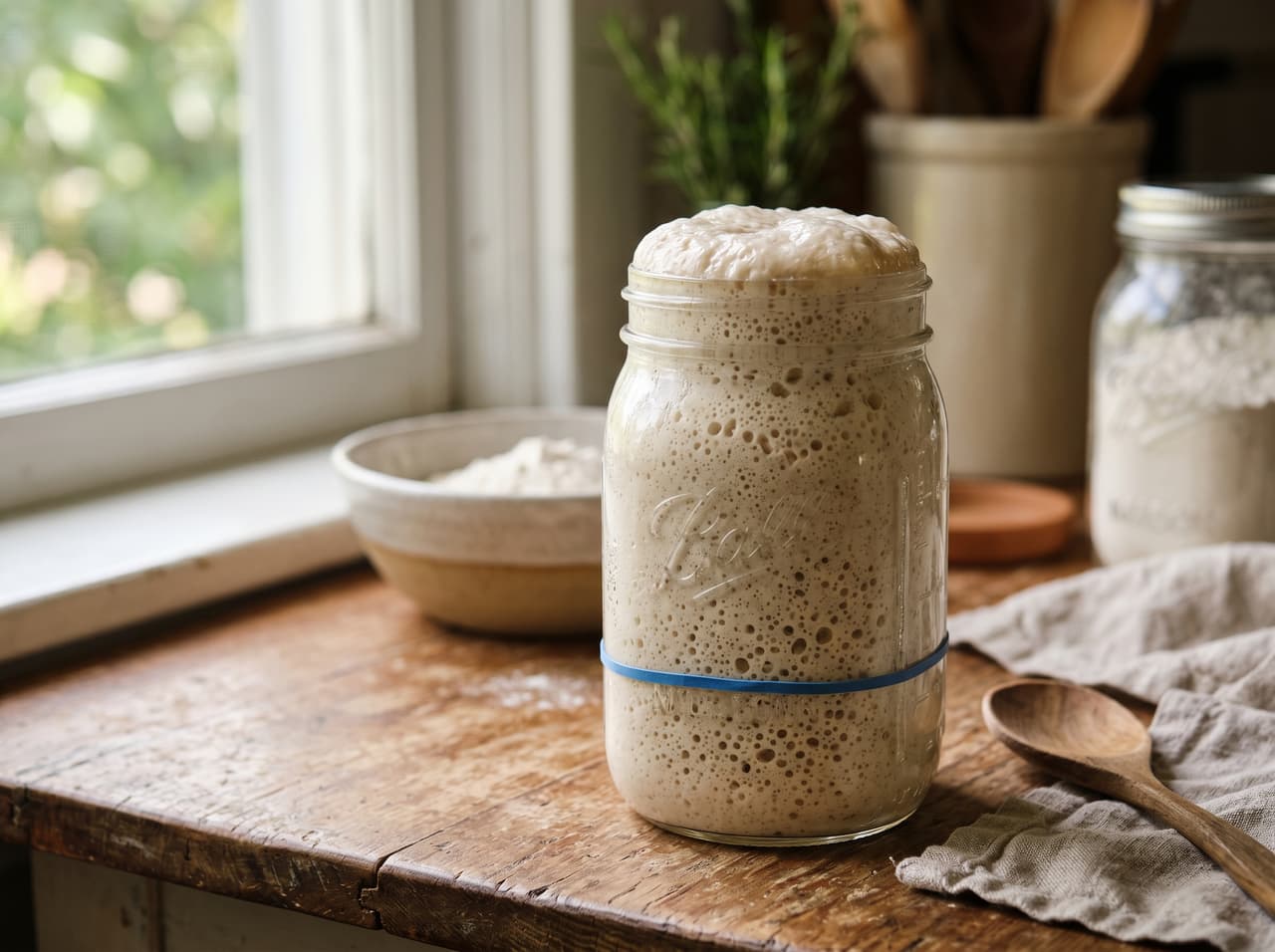
1. Consistent doubling. After feeding, your starter should reliably double in volume within 4–8 hours at room temperature (22–26°C). "Reliably" means it's done this consistently for at least 2–3 consecutive feedings — not just once.
2. Mousse-like texture. When you stir it, the texture should feel light and airy, like whipped cream or a soft mousse. You'll see bubbles throughout the mixture, not just on the surface.
3. Pleasant aroma. A ready starter smells tangy, yeasty, or mildly fruity. Think yogurt, mild beer, or green apples. A sharp acetone or nail-polish smell usually indicates over-fermentation; a smell like alcohol or cheese suggests it needs a few more days of regular feeding.
4. Activity at the dome. At peak, the surface should dome upward before slowly receding. This dome indicates the starter has built enough gas pressure to lift a bread dough.
The Float Test — Skip It
You may have read about the "float test": drop a spoonful of starter into water and see if it floats. If it floats, it's ready.
This test is unreliable. King Arthur Baking tested it directly and found that starter which had risen for only 30 minutes — clearly not ready — still floated. The test produces false positives for airy starters and false negatives for high-hydration or whole-grain starters. Use the four indicators above instead.
Troubleshooting Common Problems
My starter isn't bubbling after 3 days. The most common cause is temperature. Wild yeast and bacteria are much more sluggish below 20°C (68°F). Try moving your starter somewhere warmer — near a warm appliance, inside an oven with just the light on, or in a cooler location during summer if the opposite is the problem. Give it one more day before worrying.
It smelled great on day 2, then went quiet on day 3. This is normal. An early burst of CO₂ from leuconostoc bacteria often creates a false start. As the acid environment develops over days 3–5, the culture becomes more selective and the activity pattern stabilizes.
There's dark liquid on top. This is "hooch" — a layer of alcohol and liquid that forms when the starter is hungry. It's not dangerous. Stir it back in (or pour it off if the smell is very sharp), then feed your starter. Hooch is a sign you need to feed more frequently or use a larger flour:water ratio.
It smells like nail polish or acetone. This usually means over-fermentation — your starter peaked and went well past it. Feed it more frequently (every 8–10 hours instead of 12), and try moving it somewhere slightly cooler.
I see pink, orange, or fuzzy spots. Discard the entire batch immediately and start over with a clean jar. Any pink or orange tinge, or visible mold growth, indicates contamination that can't be saved. This is rare but does happen — usually from an unclean jar or adding something other than flour and water.
After 7 days it still won't double. Try switching entirely to whole rye flour for a few more feedings — it's reliably the best flour for building starter activity. Also check your water: heavily chlorinated tap water can inhibit fermentation. Use filtered water or let your tap water sit uncovered for an hour before using.
Storing Your Starter Long-Term
Once your starter is established, you have two main options:
The Fridge Method (recommended for most home bakers)
Feed your starter, let it sit at room temperature for 2–4 hours until you see signs of activity, then move it to the refrigerator. A well-fed starter keeps happily in the fridge for up to 2 weeks between feedings.
Before a bake, take it out of the fridge and give it 2–3 feedings at room temperature (roughly every 8–12 hours) to restore full strength and activity. This "reactivation" period ensures your starter is at peak performance on baking day.
How much to keep: There's no need to keep more than 100–200g of starter in the fridge. Most bread recipes use 50–100g, and keeping a smaller quantity means less waste at each feeding.
The Counter Method (for frequent bakers)
If you bake several times a week, keeping your starter at room temperature and feeding it once or twice daily is more practical. This requires more flour over time but means your starter is always close to peak and ready to use.
Your Next Step
You've built something alive over the past week — a culture that will improve with every feeding and every bake. The longer you maintain it, the more complex and reliable it becomes.
Your starter is ready to make bread. The natural next step is your first sourdough loaf — a beginner-friendly recipe that uses your new starter to full effect.
Use starter tracking directly in the proofit app — baking made simple.
See the sourdough app →Frequently Asked Questions
How long does a sourdough starter last? Indefinitely, with proper care. Established starters decades old are common. As long as you feed it regularly and store it properly, a sourdough starter can be maintained forever.
Can I use tap water? Yes, in most cases. If your water is heavily chlorinated, either use a filter or fill a glass and leave it uncovered for an hour — chlorine dissipates quickly. If your water has a strong smell, filtered water is worth using.
What's the best flour for feeding long-term? It depends on the flavor and performance you want. All-purpose or bread flour produces a milder, more neutral starter. Whole wheat adds more complexity. Rye produces the most active and sour starter. Many bakers settle on a blend — 80% bread flour and 20% whole rye is a common combination that balances activity with manageable acidity.
Can I bake with my starter before day 7? Technically yes, but results will be unpredictable. A starter that hasn't consistently demonstrated reliable doubling may not generate enough gas to properly leaven a loaf. Patience for the full 7 days pays off in your first bake.
What should I do with the discard? Sourdough discard (unfed starter, especially from the first week) can go straight into: pancakes, waffles, flatbreads, crackers, pizza dough, and quick breads. It won't leaven these on its own, but it adds flavor and a slight tang. Store discards in a separate jar in the fridge for up to two weeks.
My starter smells very sour. Is that normal? A sour smell is completely normal — it's the lactic acid produced by bacteria. Very sharp or vinegary smells usually mean the starter is hungry (feed it sooner) or it's being stored too warm. A pleasant sourness, like yogurt or mild vinegar, is a sign of a healthy, active culture.
What ratio should I feed my starter? The standard is 1:1:1 — equal parts starter, flour, and water by weight. This peaks in 4–6 hours at room temperature. If you need more time between feedings, use a 1:5:5 ratio (1 part starter, 5 parts flour, 5 parts water), which peaks in 8–12 hours. The higher ratio also produces a milder, less sour flavor.